Thinking About Solar Panels in Alberta? Here’s What You Actually Need to Know

More Calgary homeowners are thinking about installing solar panels every year, thanks to rising electricity bills, climate concerns, and better residential solar technology.
But is it right for your home? What does it really cost? And how much can you save?
Another common question—especially from homeowners planning to sell—is how solar panels affect home values. The reality is that solar panels don’t typically deliver a strong return on investment at resale, but financial return at closing isn’t the only reason homeowners choose to install them.
This guide gives you an overview of what you need to know about going solar in Calgary. No sales pitch—just the facts.
Benefits of Using Solar Power in Calgary
- Calgary gets 333 sunny days per year (better than most of Canada)
- Many systems can pay for themselves in 12–15 years (typical solar system costs $12,000–$25,000 before incentives)
- Net metering lets you sell extra power back to the grid
- Solar panels work fine in winter (cold can actually help them!)
Send this to friends who are thinking about solar, too.
Home Resale Value and Solar
This is a big question many homeowners ask. It's not common to stay in one home for the entire 25-plus-year lifespan of a home solar system. Are solar panels a benefit when you sell your home?
Does Solar Increase Home Value?
Here's the thing: buyers don't usually pay extra because of solar. They pay more because of the overall home.
Solar panels rarely increase a home’s value dollar-for-dollar in Calgary. They help, but they don’t return the full cost, and sometimes they don’t increase value at all. What they really do is improve marketability and reduce buyer hesitation.
When buyers walk into a home, their decision is driven by:
- Location
- Layout
- Condition
- Kitchen and bathrooms
- Natural light
- Overall emotional appeal
Most buyers see solar as a bonus, not something they'll pay a premium for.
How Much Does Solar Increase the Value of Your Home in Calgary?
In Calgary, solar is more of a "neutral to positive" feature, not a major value driver. From a resale perspective, solar panels typically fall into one of three categories:
Best case: They help the home sell faster and slightly stronger. Maybe 1%–3% impact indirectly.
Most common case: They help differentiate the home but don’t materially change the price.
Worst case: They don’t matter at all, especially if buyers don’t understand them or question reliability.
They almost never increase value by the full installation cost, and they rarely trigger a higher offer on their own. Let's say someone installs solar for $20,000. When they sell:
- They might recover $5,000 to $12,000 in perceived value
- They benefit from lower utility bills while living there
- They gain a marketing advantage versus competing listings
But it’s not a guaranteed $20,000 increase in sale price.
How Does Solar Compare to Other Pre-Sale Home Improvements?
If your goal is increasing resale value, these upgrades outperform solar:
- Kitchen upgrades
- Bathroom renovations
- Paint and lighting
- Flooring
- Curb appeal
- Air conditioning
These directly affect buyer emotion and willingness to pay more. Solar affects logic, not emotion. Emotion drives price.
What Solar Really Does for Your Home-Selling Strategy
The real benefit is positioning. Solar makes the home feel:
- Modern
- Efficient
- Forward-thinking
- Lower cost to operate
This can give buyers confidence and help your home win when competing against similar listings.
That's the real advantage.
Which Home Sales Benefit the Most from Solar Installation?
Solar is strongest when the home is already desirable and positioned as a premium property.
It helps most on:
- Newer homes
- Executive homes
- Move-up buyers
- Buyers who care about energy efficiency and long-term ownership
It matters less on:
- Entry-level homes
- Investor properties
- Homes needing updates
Honest Bottom Line
Solar panels are:
- Good for reducing operating costs
- Good for long-term ownership
- Helpful for marketing and differentiation
But they are not one of the top upgrades for maximizing resale value.
If your goal is purely resale value, solar is a secondary upgrade, not a primary one.
If your goal is long-term ownership and efficiency, solar makes much more sense.
Why Consider Solar in Calgary?
While solar isn't the best option for resale, there are other reasons to install solar in Calgary:
Calgary Gets Serious Sunshine
Calgary is one of Canada's sunniest cities. We get about 2,400 hours of sunshine annually. That's noticeably more than Vancouver, Toronto, or Montréal.
Even in winter, those bright, cold days produce plenty of solar energy. Snow reflects sunlight back to your panels, giving them an extra boost.
If you want the best bang for your buck on your home solar system, Calgary is a competitive option.
Your Electric Bills Will Drop
The average Calgary home spends $1,100–$1,800 per year on electricity. Solar can often cut that bill by 70%–90%.
Here's a real example: A typical 6 kW solar power system produces about 7,200 kWh per year in Calgary. At rates of around $0.09/kWh, that's $648 in electricity you don't have to buy each year.
Over 25 years, that could amount to $16,200 in energy savings. And solar panel systems can last well beyond the "expected" 25 years, just at slightly lower efficiency.
Help the Environment
Every kWh your solar panels produce means less coal and natural gas need to be burned. A typical home solar system prevents about 3.4 tons of CO2 emissions annually. That's a big impact on your carbon footprint.
Let's put it into perspective: a typical car produces around 2.35 kg of CO2 per litre. Adding a typical solar power system to your house is like taking a car off the road for roughly 16,300 kilometres per year. For reference, the typical Canadian drives about 15,200.
If your dream home includes eco-friendly features, solar panels are a high-impact option to consider.
How Solar Panels Work
The Basic Setup
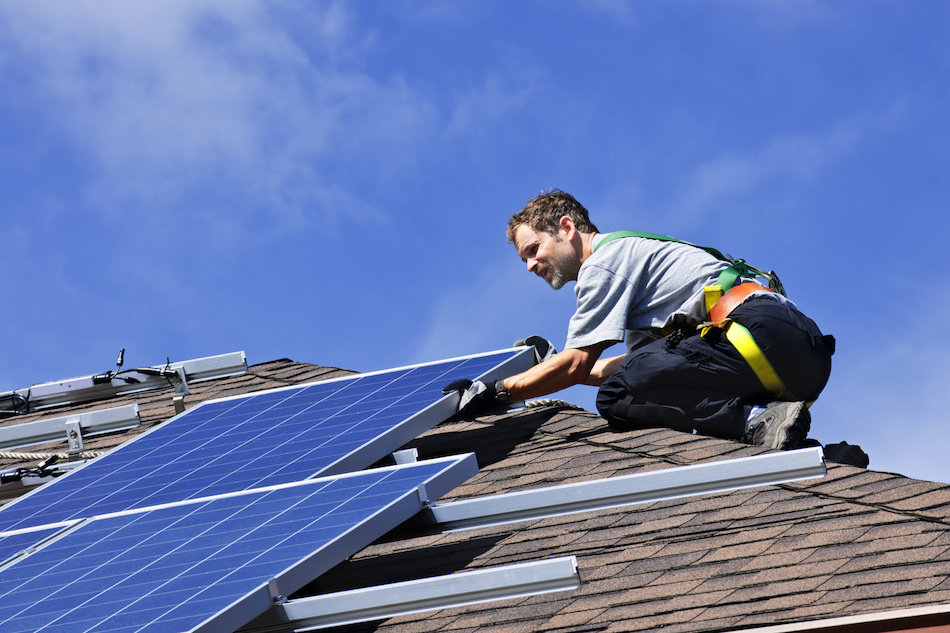
Solar panels capture sunlight and turn it into electricity—a process called photovoltaics, or PV for short. PV cells make up the main structure of the solar panel. Some light is absorbed when the sun shines on a PV cell, dislodging some of the cell's electrons. The cell has special treatments applied to the surface to attract these free electrons, creating voltage. The electrons flow through wires in the electrical circuit and create electrical currents.
An inverter changes that power from DC (direct current) to AC (alternating current), which is the type your home uses.
The resulting solar energy can be used immediately, sent to a power grid, or stored for later use in solar batteries.
Types of Solar PV Systems
Most Calgary homes use grid-tied systems. Grid-tied means you're still connected to ENMAX or your utility company. When your panels make more power than you use, the extra goes to the grid. When you need more power than your panels make, you pull from the grid. Simple, right?
These systems are the most affordable option. They also require less maintenance than off-grid systems, and you don't have to worry about storing energy or running out of power. Additionally, grid-connected solar panels can help you save even more money on your utility bill by selling the excess to your local utility company. That's called "net metering."
People use off-grid systems in remote areas without access to a utility grid. They're more expensive than grid-connected systems, but they offer several advantages. Since you're not connected to the grid, you don't have to worry about power outages or blackouts—grid-tied systems may shut off during outages to protect utility workers from energy flowing back into the grid while they're working to fix the problem.
Net Metering Earns You Bonus Cash
This is how you can boost your solar savings by selling power back to the grid.
Net metering is like a bank account for electricity. Your meter runs backward when you're producing more than you use. The extra power you generate gets "stored" as credits. When you need power at night or on cloudy days, you use those credits to buy electricity from the grid.
Your electric bill won't disappear completely. You'll still pay:
- Monthly connection fees ($25–$35)
- Any power you use beyond what your panels produce
- Delivery charges (usually reduced)
But your energy charges will drop dramatically. Many Calgary homeowners see their bills go from $150–$200 per month to $25–$50.
ENMAX and other Alberta utilities must offer net metering by law. ENMAX offers net metering throughout Calgary. Other providers like Direct Energy and ATCO also participate.
The rates and terms are similar across providers, but ask about the specific details for your utility company.
What About Batteries?
You can add solar batteries to be less reliant on the grid, but most Calgary homeowners don't need them. Batteries add $8,000–$15,000 to your system cost, so they're a substantial add-on.
Grid-tied systems without batteries are simpler, cheaper, and still give you the benefits of solar. The grid essentially operates as a big battery + more energy if you need it.
Costs and Financial Incentives
What You'll Actually Pay
A typical Calgary home needs a 6–8 kW solar system to fully cover electricity use. Here's what various system sizes typically cost:
- 5 kW system: $12,000–$15,000
- 10 kW system: $20,000–$25,000
- 15 kW system: $30,000–$35,000
Keep in mind, these are the prices to install solar panels before any rebates or incentives are applied. And it might be tempting to try DIY installation to save money, but remember: you're dealing with electrical systems. This is a project best left to pros.
Alberta and Calgary Incentives
Alberta doesn't currently offer provincial solar rebates, but Calgary has competitive financing options for solar and battery upgrades under the Clean Energy Improvement Program.
Programs change and funding levels change year to year, so check the City of Calgary website and Alberta.ca to make sure you aren't leaving any money on the table. Several municipalities in Alberta offer additional rebates and incentives.
Financing Options
You don't need $20,000 cash upfront. Options include:
- Solar loans: Many banks offer loans specifically for solar installations. Rates are usually around 6%–7%, but the CEIP lets you finance 100% of your system at 3.75%, and you can pay it off at any time without penalty.
- Home equity line of credit: Often a cheap home improvement financing option if you qualify.
- Solar leasing: Some companies let you lease panels with $0 down. Monthly payments are usually less than your current electric bill.
- Power purchase agreements: You pay for the power the panels produce, not the panels themselves.
What Happens to Your Solar When You Sell?
When you sell your home, solar agreements usually transfer to the new owner.
- Owned systems: Transfer with the home like any other fixture.
- Financed systems: Either paid off (making them owned) or disclosed with responsibility transferred to the new owner.
- Leased systems: New owner takes over lease payments.
- Power purchase agreements: New owner continues the contract.
Choosing a Solar Installer in Calgary
What to Look For
Not all solar installers are equal. Here's what matters:
- Local experience: They should understand Calgary's weather, building codes, and permit requirements.
- Proper certifications: Look for CSA Group certification.
- Local references: Ask for recent references in your neighbourhood.
- Warranty details: Who handles warranty claims? What happens if the company goes out of business?
Questions to Ask Before Hiring
- How many installations have you completed in Calgary?
- Can I see examples of your work in my neighbourhood?
- What warranties do you offer on equipment and installation?
- Who handles permits and utility connections?
- What's your timeline from contract to system activation?
- Do you offer monitoring to track system performance?
Red Flags to Avoid
Don't work with companies that:
- Go door-to-door with high-pressure sales tactics
- Demand full payment up front
- Can't provide local references
- Promise too-good-to-be-true savings or payback periods
- Won't put warranty terms in writing
Roof Suitability and Installation Considerations
Best Roof Types
Asphalt shingles: One of the most common roofing materials, and good for solar. Easy installation, strong attachment points. Ask your solar company what costs to expect for removing and replacing panels when it's time to replace the roof.
Metal roofing: Excellent choice. Panels attach easily, and metal roofs usually last as long or longer than solar panels. More expensive than shingles.
Tile roofs: Possible but more complex. Installation costs may be higher.
Roof Direction and Angle
South-facing roofs work best. But southeast and southwest orientations also work well.
The ideal roof angle in Calgary is 45–53 degrees. Steeper or flatter roofs still work but produce slightly less power.
Shading Issues
Even small amounts of shade can hurt solar production. Trees, chimneys, or nearby buildings that shade your roof are going to be problems.
Most installers use software to analyze shade levels throughout the year. Don't skip this step!
Roof Age and Structure
Your roof should be in good condition before adding solar panels. If your roof needs replacement within 5–10 years, do that first.
A solar panel typically weighs about 23 kg. Your roof will have to hold the collective weight of each solar panel and the mounting rails, but remember that the weight may vary based on the type of panel chosen. Most Calgary homes built after 1980 can handle the weight of solar panels without structural changes.
Permits and Timeline
Calgary requires building permits for solar installations, but that's not necessarily something you'll need to handle. Generally speaking, your installer should handle all permits.
Typical timeline:
- Initial consultation: One to two weeks
- Design and permits: Two to six weeks
- Installation: One to three days
- Utility connection: Two to six weeks
Typical total time from contract to activation: 6–12 weeks.
Maintenance and Lifespan
How Long Do Solar Panels Last?
Solar panels typically last 25–30 years. They don't just stop working after 25 years, though—they just gradually produce less power.
Most panels still produce 80%–85% of their original power after 25 years. Some are rated for even longer. And given that solar technology is only going to get better, by the time you need to replace a few panels, you'll likely have even better options.
Maintenance Needs

Solar panels need very little maintenance:
- Cleaning: Calgary's rain and snow usually keep panels clean. You might need to hose them off once or twice per year. Read the manufacturer's cleaning instructions—chemical cleaners can do more harm than good.
- Snow removal: You usually shouldn't climb on your roof to remove snow. Panels are slippery when wet. Most snow slides off naturally.
- System monitoring: Check your system's app or website monthly to make sure it's producing as expected.
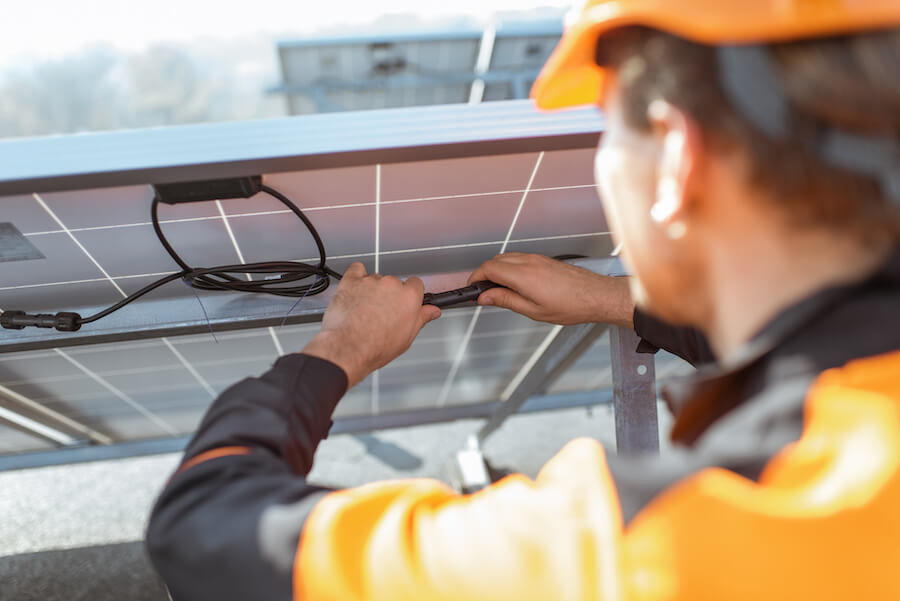
- Professional inspection: Have your installer check the system every three to five years. The connections between the panels and the inverter in particular should be checked regularly.
Warranty Information
- Panel warranties: Typically 20–25 years for power output, 10–15 years for manufacturing defects.
- Inverter warranties: 10–12 years typically. Some extend to 20–25 years.
- Installation warranties: 5–10 years for workmanship.
Read the warranty terms carefully so you understand what's covered and who handles claims.
Common Myths and Misconceptions
"Solar Doesn't Work in Winter"
This is completely false. Cold temperatures actually increase the efficiency of solar panels! In cold weather, the energy difference between "resting" electrons and electrons activated by sunlight is bigger, so more voltage is produced.
In addition, Calgary's winter sunshine is strong, and snow reflects additional light onto your panels.
Your panels will produce less power in December than in July (due to shorter days and lower sun angle), but they still produce significant power all winter.
"It's Too Expensive"
Solar costs have plummeted over 80% in the last decade. With federal incentives and financing options, many Calgary homeowners are surprised to learn that they can afford solar.
Compare the cost of installing solar to the cost of rising electricity rates over time and how long you plan to stay in your house. The equation might look different than you think.
"Maintenance Is a Hassle"
Modern solar energy systems are incredibly reliable. Most have 10–20+ year warranties and need almost no maintenance.
Your installer should be able to monitor your system remotely. If something goes wrong, they'll contact you.
"Solar Panels Are an Eyesore"
Taste is subjective, but there are more discreet solar energy systems if you don't want the look of traditional panels. Building-integrated photovoltaic (BIPV) systems combine PV cells with roofing materials to create a seamless look.
BIPV systems are available in two different forms: solar shingles and photovoltaic slates. They're a great option for homeowners looking for an attractive and efficient way to go solar.
So, Is Solar Right for You?
Calgary's sunny skies are perfect for solar energy. But every home in Calgary is different, and every Calgarian homeowner has their own priorities and financial situation.
Investigate the resources provided by the Calgary Climate Change Program—they have an address- and bill-specific residential solar calculator and information on Calgary-specific solar installation rules.
Understand your specific situation and find the right installer. Interview several. Get quotes. Compare equipment, warranties, and total costs.
Remember, solar is a 25-to-30-year investment. Researching will pay off for decades, so don't rush your decision just because a friendly salesperson came to your door with a great offer.
If you or someone you know is interested in making a move- Contact Us - Rebecca & Kurtis Garrett- First Reasonse Realty and REAL Broker- 403-969-9222. - Rebecca@firstresponserealty.ca. Kurtis@firstresponserealty.ca
Categories
Recent Posts