Should You Renovate Your Kitchen Before Selling Your Home?

Should You Renovate Your Kitchen Before Selling Your Home?
You walk into your kitchen and immediately notice it.
The honey oak cabinets from the 90s. The laminate countertops that have definitely seen better days. And the little voice in your head that says, buyers are going to notice this.
So the question becomes: should you spend $30,000 renovating your kitchen before listing, or simply price the home accordingly and let the next owner update it themselves?
Kitchen renovations can offer a strong return on investment—sometimes up to 75–100% depending on the market. But that doesn’t mean every kitchen upgrade makes financial sense when you're preparing to sell.
The reality is that some updates help your home sell faster and for more money, while others simply drain your budget without adding real value.
The key is understanding what buyers in your local market actually care about—not what looks impressive on a renovation TV show.
Quick Kitchen Update Guidelines for Sellers
Before diving into a renovation project, here are a few important things to keep in mind:
• Small updates often outperform full renovations. Painting cabinets can sometimes deliver more value than replacing them entirely.
• Neutral finishes sell best. White cabinets and simple countertops appeal to the widest group of buyers.
• Avoid over-improving. A luxury kitchen in a modest home rarely recoups the investment.
• Consider the timeline. Full renovations can easily take five to eight months.
• Budget for surprises. Renovations almost always cost more than expected—plan for about 20% extra.
• Match your neighbourhood. High-end finishes may not make sense in every area.
• Sometimes pricing strategically works better than renovating.
The Reality of Kitchen Renovation ROI
Let’s talk numbers.
In Canada, kitchen renovations typically range between $21,000 and $50,000 and can return 75–100% of the investment, depending on the market and the scope of the project.
But there’s an important detail those statistics often miss.
Most of those high ROI numbers come from minor kitchen updates, not full gut renovations.
A smaller refresh—like new countertops, cabinet updates, and modern fixtures—might cost $13,000–$20,000 and often provides the strongest return.
In markets like Calgary, these types of updates tend to give sellers the best results. Improvements to cabinets, counters, and energy-efficient appliances can make a kitchen feel updated without overspending.
On the other hand, major renovations tell a different story.
Once you start removing cabinets, relocating plumbing, or installing luxury finishes, costs can climb to $40,000–$50,000 or more. At that point, the return on investment can drop significantly—sometimes to 50–60%, or even lower with high-end materials.
Why?
Because most buyers are looking for a clean, functional kitchen, not necessarily the most expensive one.
A fresh, well-maintained space will often outperform an expensive renovation that tries to solve problems buyers didn’t see in the first place.
Before Renovating, Ask Yourself These 3 Questions
Before committing to a renovation, it's worth stepping back and evaluating your situation.
1. What’s Your Timeline?
If you’re planning to sell in the next two to three months, major renovations are rarely worth the stress.
Projects almost always take longer than expected, and delays can push back your listing timeline.
If you have six months or more, smaller strategic updates may be worthwhile—but even those can take several months once planning and scheduling contractors are factored in.
If your listing timeline is under four months away, it’s often better to focus on cleaning, staging, and cosmetic updatesinstead of full renovations.
2. What Do Competing Homes Look Like?
One of the most important things you can do is look at comparable homes in your neighbourhood.
If most homes nearby have updated kitchens, yours might stand out for the wrong reasons.
But if many kitchens look similar to yours, buyers likely won’t see it as a problem.
Major concerns that can hurt a sale include:
• Cabinets that are broken or don’t close properly
• Missing or non-functional appliances
• Poor layouts with little counter space
• Anything that makes the kitchen feel unsafe or unsanitary
If buyers can easily imagine cooking in your kitchen, you’re probably fine with minor improvements.
3. What’s Your Budget?
A good rule of thumb is to avoid spending more than 5–10% of your home’s value on kitchen updates when preparing to sell.
For example, if your home is worth $400,000, kitchen improvements should ideally stay under $20,000–$40,000.
And remember—renovations almost always uncover surprises.
Old wiring, plumbing issues, or material delays can quickly increase costs, which is why it’s smart to budget an extra 20% beyond initial quotes.
Kitchen Updates That Actually Pay Off
If you decide to make improvements, focus on changes that offer the biggest visual impact without a massive investment.
Refresh the Cabinets
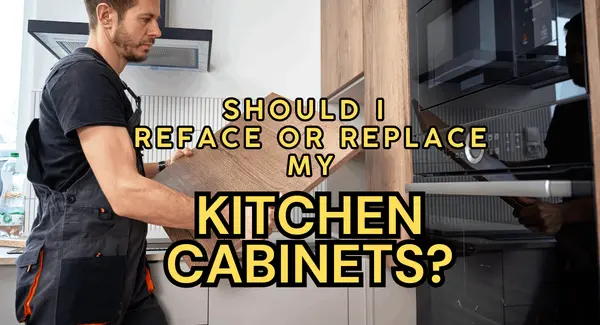
If your cabinet boxes are in good condition, refacing or painting them can dramatically modernize the space.
Cabinet refacing usually costs $4,000–$12,000, compared to $6,000–$40,000 for full replacements.
Even a fresh coat of paint in white, light grey, or soft neutral tones can transform a kitchen for under $1,000 if done yourself.
Update the Countertops
Quartz and granite remain popular choices for buyers.
Quartz typically costs $50–$150 per square foot installed, while granite can range from $40–$100 per square foot.
The key is balance—new countertops paired with severely dated cabinets can make buyers wonder what you’re trying to hide.
Improve Lighting
Lighting is one of the most underrated upgrades.
Simple improvements like under-cabinet LED lighting, updated fixtures, or pendant lights over an island can instantly make a kitchen feel brighter and more modern.
Many of these updates cost just a few hundred dollars but dramatically improve how the space feels.
Add a Simple Backsplash
A clean backsplash helps tie the kitchen together.
Classic white subway tile works in almost any home and typically costs $7–$35 per square foot installed.
Keeping it neutral helps ensure it appeals to the widest group of buyers.
Renovation Mistakes That Hurt Your ROI
One of the biggest mistakes sellers make is over-improving their home for the neighbourhood.
Spending $80,000 on a luxury kitchen in an area where homes sell for $400,000 simply doesn’t make financial sense.
Buyers rarely pay extra for premium finishes if the rest of the neighbourhood doesn’t support those values.
Other common mistakes include:
• Highly personalized design choices
• Trendy finishes that quickly go out of style
• Expensive professional-grade appliances
• Custom built-ins that limit flexibility
When preparing a home for sale, neutral and functional almost always wins.
Alternatives to Renovating
Updating your kitchen isn’t the only option.
The “Fresh and Clean” Approach
Sometimes the best results come from a deep clean and small cosmetic updates.
For $2,000–$5,000, you can often:
• Professionally deep clean the kitchen
• Paint the walls and trim
• Replace cabinet hardware
• Update light fixtures
• Install a new faucet
This approach works especially well when the kitchen layout already functions well.
Pricing Strategically
In many markets, it can make more sense to price the home slightly lower instead of renovating.
Reducing the price by 2–3% allows buyers to update the kitchen themselves while saving you the stress of managing renovations.
Offering a Renovation Credit
Another option is offering a credit toward kitchen updates, often around $10,000–$20,000.
Buyers appreciate the flexibility to choose their own finishes, and it allows you to avoid the renovation process altogether.
The Bottom Line
Kitchen updates can absolutely help your home sell faster and for a higher price—but only when the improvements make sense for your market and your home.
In many cases, minor updates deliver the best return.
Focus on fresh, neutral finishes, avoid over-improving, and always consider your timeline and local market conditions.
And sometimes, the smartest strategy isn’t renovating at all—it’s simply pricing your home correctly from the start.
Categories
Recent Posts